Jacob W. Toney
PhD Candidate, Chemical Engineering & Computational Science, MIT

I’m a PhD candidate in Chemical Engineering and Computational Science in the Kulik Group at MIT, where I work at the intersection of machine learning and quantum chemistry. My work is focused on transition metal complexes, notoriously challenging systems where conventional physics-based and data-driven methods fail, but are promising candidates for catalysis, sustainability, and medicine.
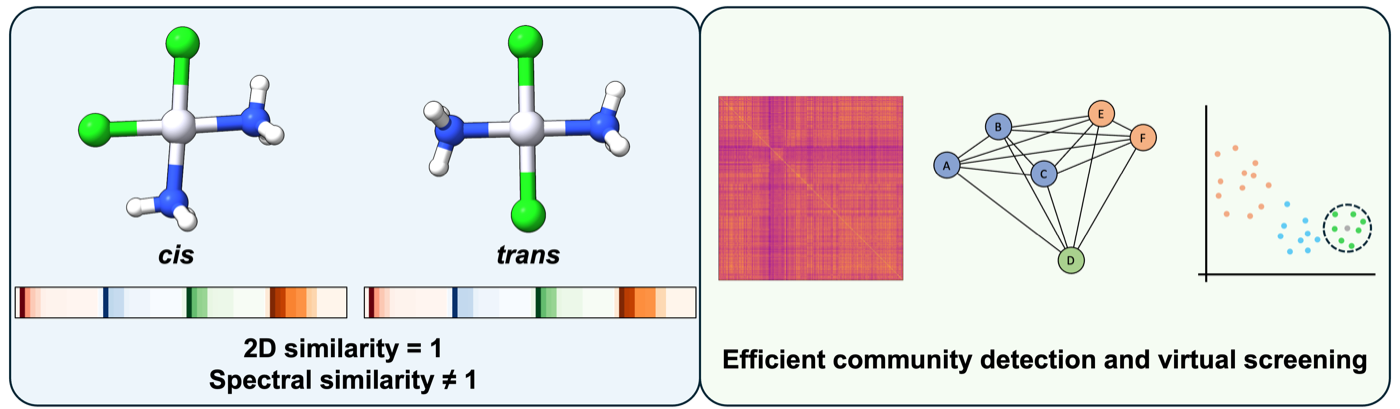
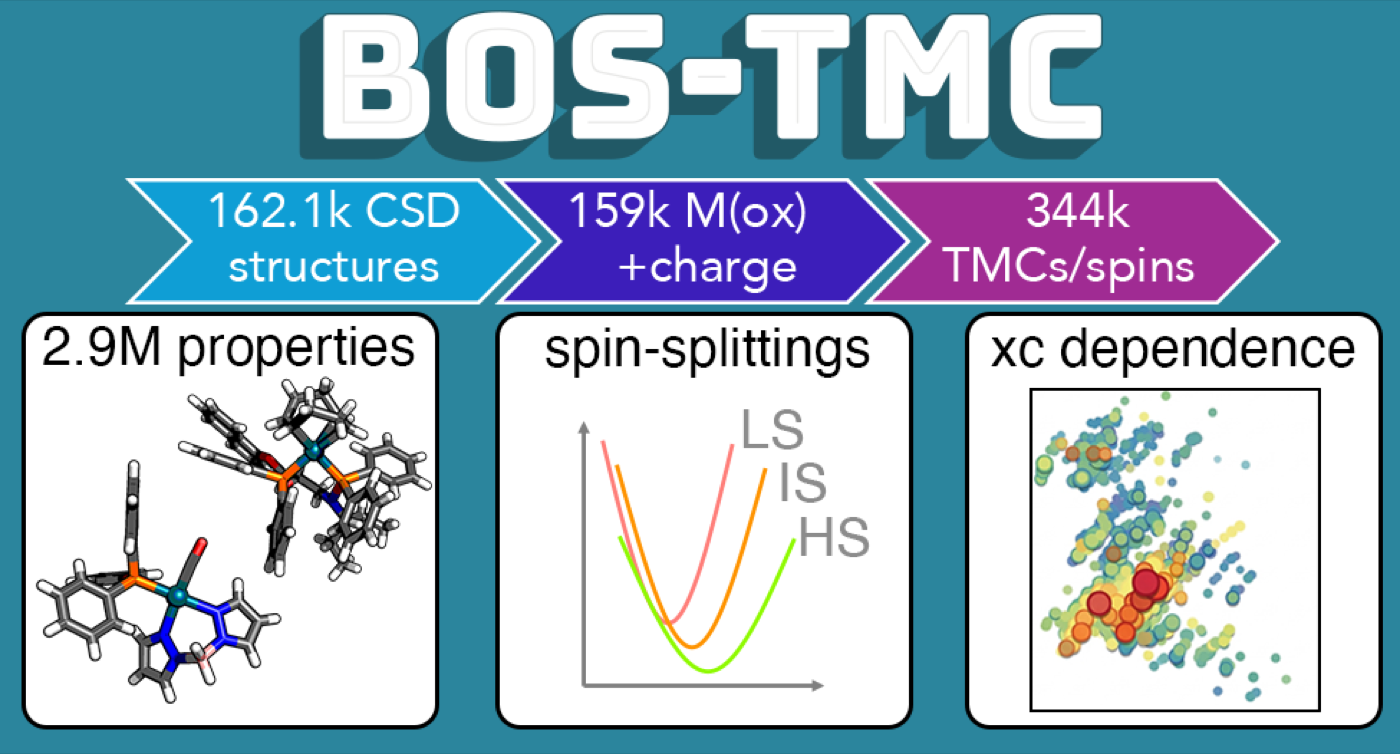
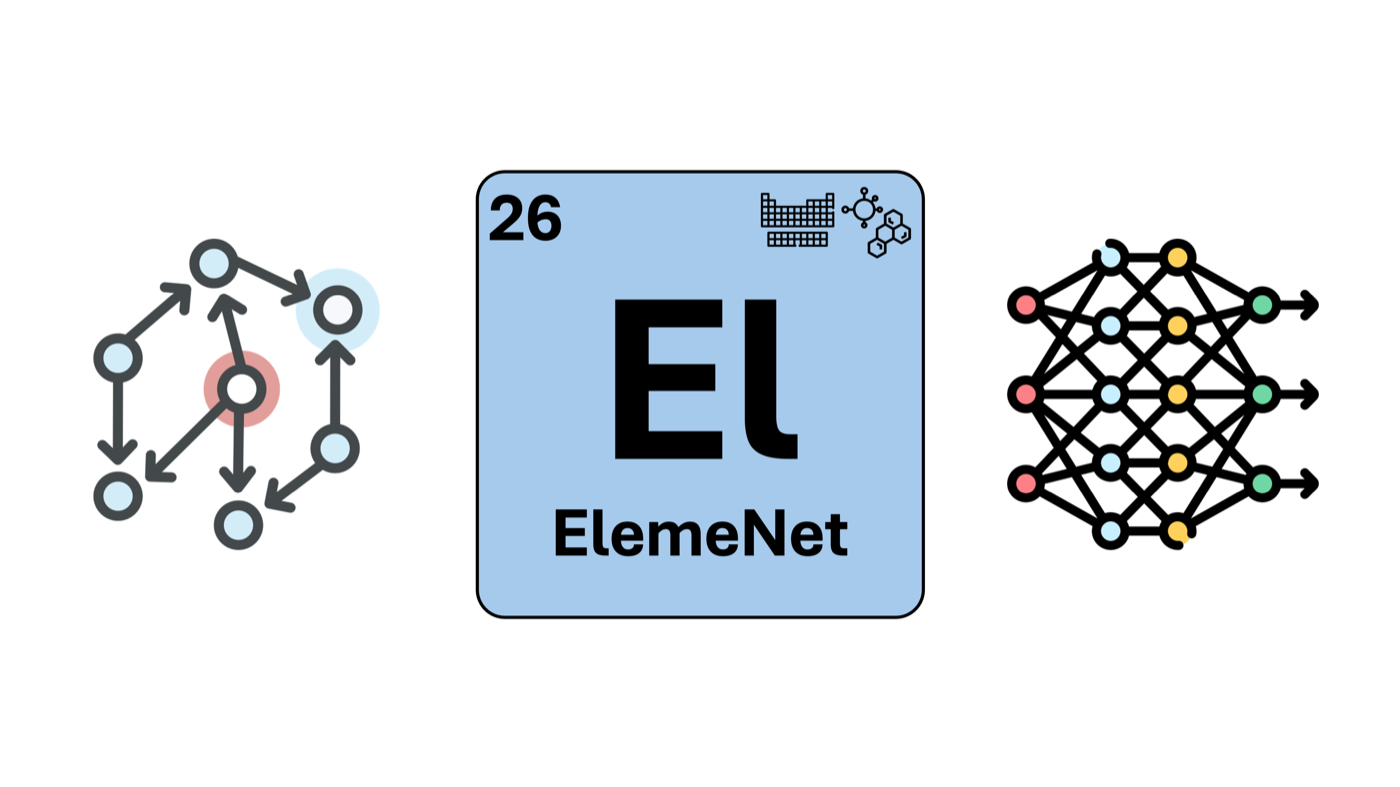
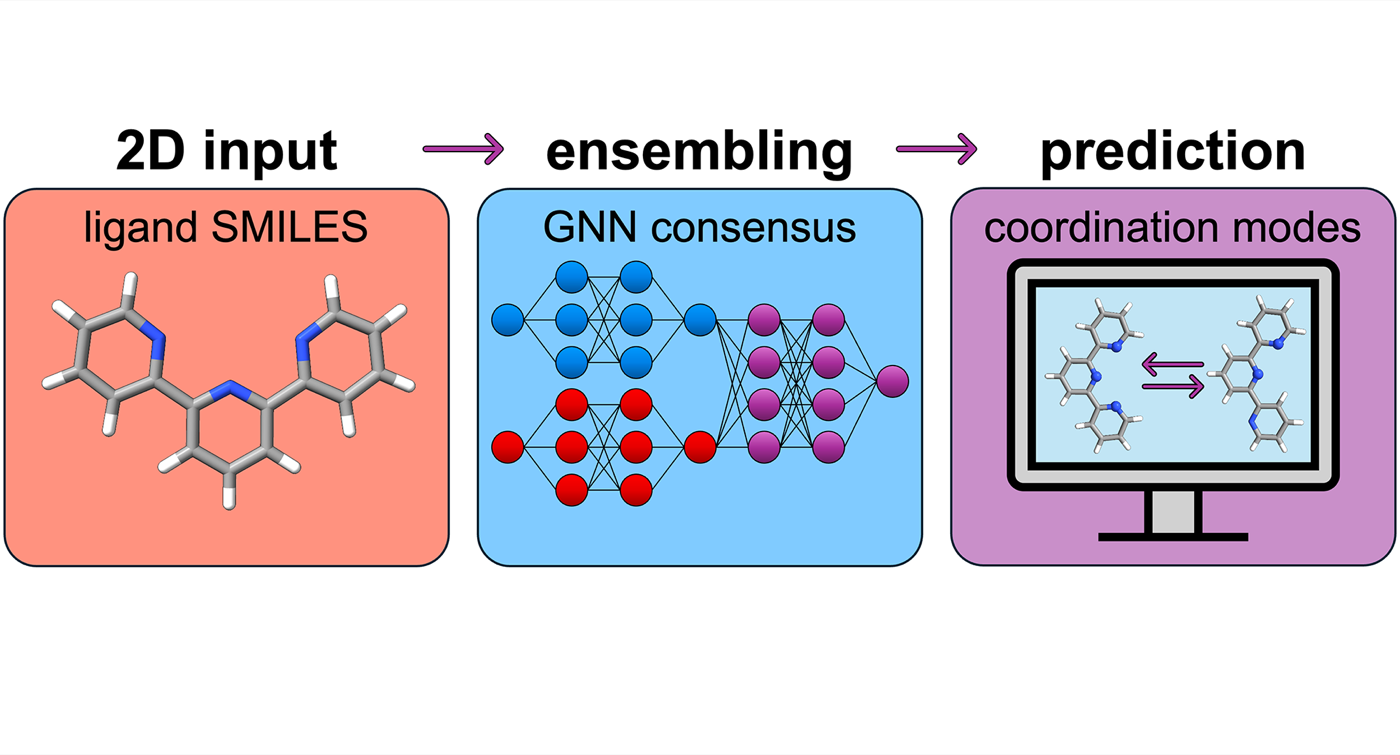
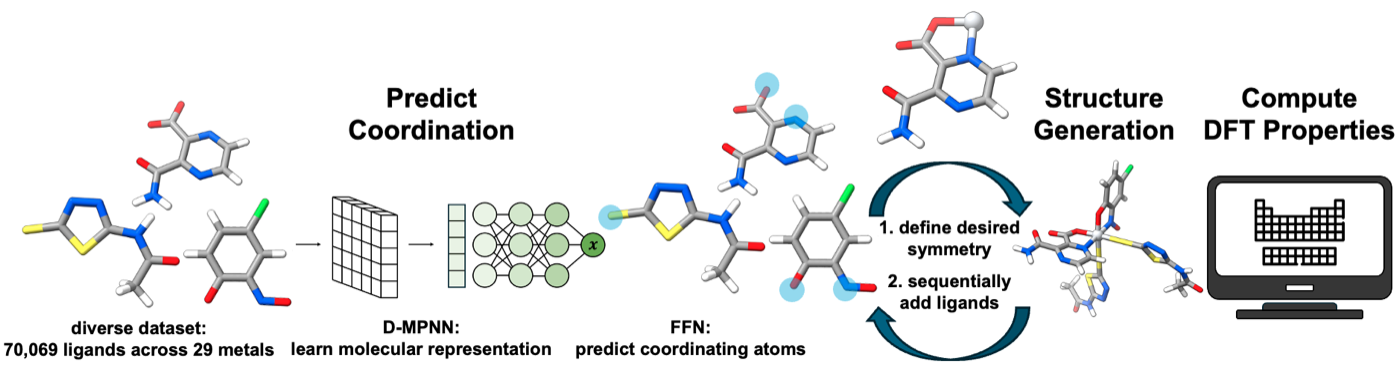
Specifically, I work on geometric deep learning models to predict the structural, chemical, and electronic properties of organometallics, including their bonding behavior, transition states, and quantum mechanical observables. I’ve worked to curate BOS-TMC, the largest and most diverse quantum chemical dataset of experimentally-synthesized transition metal complexes. Recently, I’ve been developing ElemeNet, an open-source software package for molecular machine learning defined across the periodic table, and devising novel molecular fingerprints based on spectral graph theory. I enjoy merging electronic structure theory, machine learning, and high-performance computing to build new methods and accelerate scientific discovery!
I’m spending summer 2026 at IBM Research, working on wavefunction embedding methods for simulating large chemical systems on quantum computers, alongside generative models for protein structure prediction. Before MIT, I completed my B.S. and M.S. in Chemical Engineering at the University of Southern California, completing computational catalysis research with Professor Shaama Sharada, and spent a gap year as an Operations Engineer at SpaceX optimizing spacecraft production.
Outside of research, I enjoy concerts, writing music, old movies, dinosaurs, baseball, and Formula 1.
I’m open to work — if you’re researching machine learning, computational chemistry, scientific computing, or anything in between, I’d love to chat!
news
| Aug 05, 2026 | New preprint on arXiv: physics-based molecular fingerprints from spectral graph theory, giving efficient geometry-aware measures of chemical similarity. |
|---|---|
| Jul 10, 2026 | BOS-TMC is published in J. Chem. Inf. Model. — DFT properties for 159k experimentally characterized transition metal complexes across charge and spin states. |
| Jul 01, 2026 | Our work on robust generative transition state models for unseen chemistry is published in Nature Computational Science. |
| Jun 20, 2026 | ElemeNet is on arXiv — a unified package for molecular ML across elements 1–100, with built-in uncertainty quantification. |
| Jun 01, 2026 | Started as an Algorithms and Applications Intern at IBM Research in Yorktown Heights, working on wavefunction embedding for correlated electronic structure and generative models for proteins. |