publications
Reverse chronological. An asterisk (*) denotes equal contribution.
Also indexed on Google Scholar and ORCID.
2026
- Physics-Based Molecular Fingerprints from Spectral Graph Theory Provide Efficient Geometry-Aware Measures of Chemical SimilarityJacob W. Toney, Ayleen Y. Farnood, Samir Darouich, and Heather J. KulikarXiv, 2026
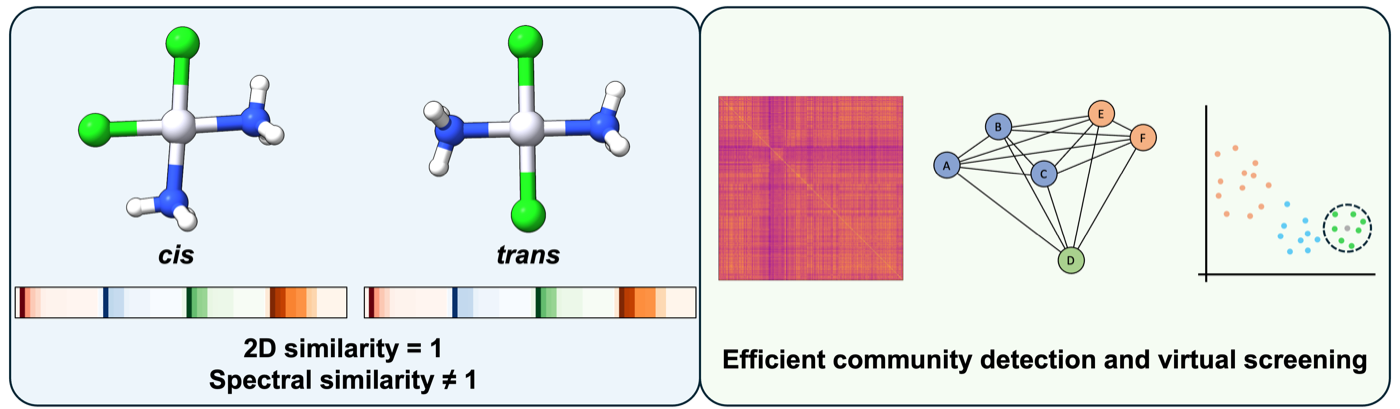
Molecular representations are essential for the evaluation of molecular similarity and the development of structure-property relationships. Despite the known importance of 3D structure to determine chemical and physical properties, the most widely used molecular fingerprints encode only two-dimensional connectivity. Such representations fail to distinguish similar but distinct stereoisomers and conformers. Alternative 3D methods are typically defined pairwise, making their application to large chemical spaces prohibitive, while deep learning embeddings are expressive but uninterpretable and limited by their training data diversity. Here, we introduce novel physics-inspired molecular fingerprints based on principles from spectral graph theory. We represent molecules as a complete graph in 3D space, with edge weights encoding heuristic physical interactions. Eigenvalue decomposition of the resulting graph Laplacian matrix results in a computationally efficient fixed-length chemical fingerprint that encodes 3D structure while obeying necessary physical symmetries of permutation and E(3) invariance. Spectral fingerprints differentiate between unique molecular structures with identical 2D connectivity, overcoming a limitation of 2D descriptors, while maintaining the low computational cost needed for efficient screening of vast chemical spaces. We evaluate our fingerprints with community detection algorithms and observe strong performance against representative baselines across datasets from organic, inorganic, biological, reticular, and reaction chemistry. Nearest-neighbor property estimation and applicability domain analyses reveal the utility of our molecular representation in machine learning and cheminformatics. We anticipate that spectral fingerprints will serve as generalizable, interpretable, and efficient measures of chemical similarity that incorporate 3D information at minimal cost.
@article{toney2026fingerprints, title = {Physics-Based Molecular Fingerprints from Spectral Graph Theory Provide Efficient Geometry-Aware Measures of Chemical Similarity}, author = {Toney, Jacob W. and Farnood, Ayleen Y. and Darouich, Samir and Kulik, Heather J.}, journal = {arXiv}, year = {2026}, publisher = {arXiv}, doi = {10.48550/arXiv.2608.05336}, url = {https://doi.org/10.48550/arXiv.2608.05336} } - The BOS-TMC Dataset: DFT Properties of 159k Experimentally Characterized Transition Metal Complexes Spanning Multiple Charge and Spin StatesAaron G. Garrison*, Jacob W. Toney*, Tatiana Nikolaeva, Roland G. St. Michel, Christopher J. Stein, and Heather J. KulikJournal of Chemical Information and Modeling, 2026
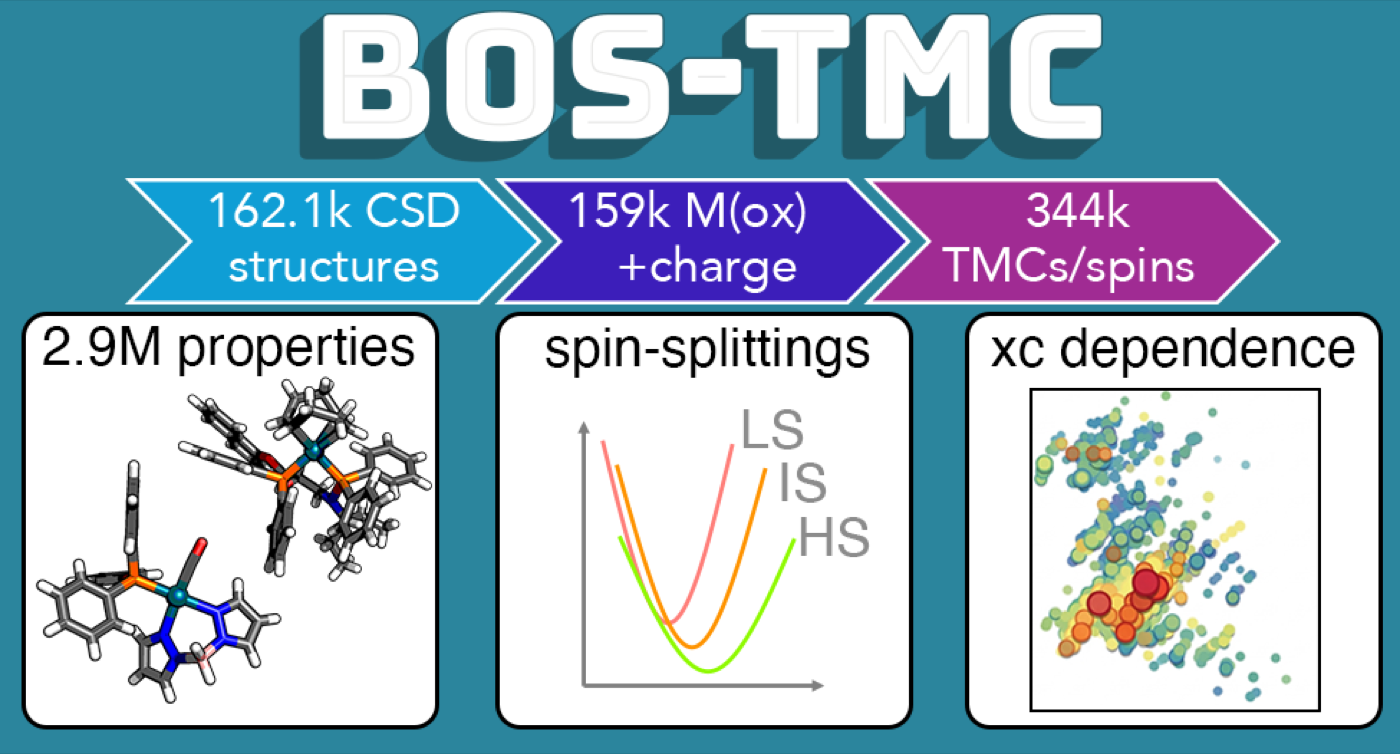
We present the Boston Open-Shell Transition Metal Complex (BOS-TMC) dataset, a set of density functional theory (DFT) properties for 159k experimentally characterized mononuclear transition metal complexes (TMCs) in multiple spin states with a range of formal charges derived from the Cambridge Structural Database (CSD). To curate this set, we carried out an iterative procedure to confidently assign overall TMC charge. From this information, we then obtained properties in up to three spin states, i.e., low-, intermediate-, and high-spin for 3d metals and low- and intermediate-spin for 4d and 5d metals, depending on compatibility with the metal electron configuration, for a total of 343.8k TMC/spin combinations. At odds with prior sets, we preserved experimental heavy-atom coordinates in these structures during optimization. We report all properties using PBE0/def2-TZVP single-point energies on these structures. We introduce a scheme for computing metal-spin-dependent atomization energies, which we report for each TMC. Alongside electronic energies, we report up to seven additional properties including: HOMO, LUMO, HOMO-LUMO gap, atomic partial charges, dipole moments, atomization energies, and spin-splitting energies for a total of over 2.9M TMC-associated properties. For a representative subset of over 10k complexes chosen based on size, we evaluate the sensitivity of computed properties to exchange-correlation (xc) functional choice from a set of twelve xcs spanning rungs of "Jacob’s ladder", highlighting hotspots of TMC space that have the greatest uncertainty. In comparison to prior transition-metal datasets, BOS-TMC is both larger and more diverse in terms of charge and spin configurations and, as a result, more diverse in its range of properties. This dataset is expected to provide a high-fidelity foundation for machine-learning model development, DFT benchmarking, and exploration.
@article{garrison2026bostmc, title = {The BOS-TMC Dataset: DFT Properties of 159k Experimentally Characterized Transition Metal Complexes Spanning Multiple Charge and Spin States}, author = {Garrison, Aaron G. and Toney, Jacob W. and Nikolaeva, Tatiana and St. Michel, Roland G. and Stein, Christopher J. and Kulik, Heather J.}, journal = {Journal of Chemical Information and Modeling}, year = {2026}, publisher = {American Chemical Society}, doi = {10.1021/acs.jcim.6c01792}, url = {https://doi.org/10.1021/acs.jcim.6c01792}, } - Robust Generative Transition State Models for Unseen ChemistrySamir Darouich, Jacob W. Toney, Weiliang Luo, Johannes Kästner, Mathias Niepert, and Heather J. KulikNature Computational Science, 2026
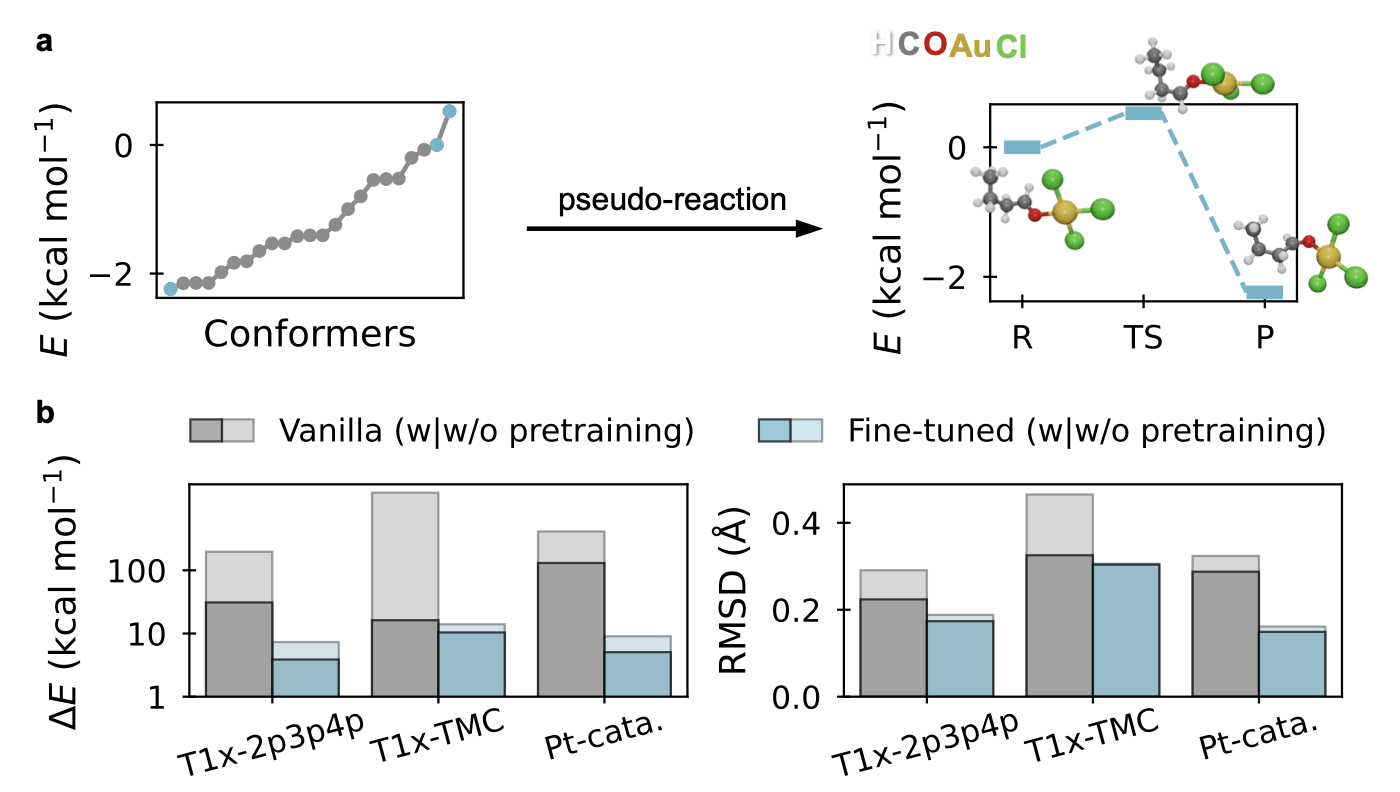
Transition states (TSs) govern the rates and outcomes of chemical reactions, making their accurate prediction a central challenge in computational chemistry. Although recent machine-learning models achieve near chemical accuracy in the prediction of TS structures and the associated reaction barriers for small organic reactions, their ability to generalize beyond the training domain remains largely unexplored. Here, we introduce targeted benchmarks to probe chemical and structural novelty in generative TS prediction. Building on Transition1x, a large-scale dataset of reactions involving small organic molecules, we construct curated extensions incorporating controlled elemental substitutions and diverse transition-metal complexes (TMC). These benchmarks reveal fundamental limitations of generative models in the generalization to previously unseen elements. As a result, they produce unphysical geometries and large energetic errors, even for reactions structurally similar to well-predicted organic systems. To address this challenge, we introduce a self-supervised pretraining strategy based on equilibrium conformers that exposes generative TS models to novel chemical environments prior to targeted fine-tuning. Across the newly proposed benchmarks, self-supervised pretraining substantially improves TS prediction for previously unseen systems, lowering the median RMSD of TS geometries on T1x-TMC reactions from 0.39 to 0.19 Å and reducing fine-tuning data requirements by up to 75%, enabling reliable performance even in low-data regimes. Overall, the integration of generative TS models with self-supervised pseudo-reaction pretraining provides an efficient, scalable, and chemically robust framework for elucidating TSs well beyond the small organic molecule domain, establishing a foundation for investigating complex and catalytically relevant reaction landscapes.
@article{darouich2026ncs, title = {Robust Generative Transition State Models for Unseen Chemistry}, author = {Darouich, Samir and Toney, Jacob W. and Luo, Weiliang and Kästner, Johannes and Niepert, Mathias and Kulik, Heather J.}, journal = {Nature Computational Science}, year = {2026}, publisher = {Nature Portfolio}, doi = {10.1038/s43588-026-01034-5}, url = {https://doi.org/10.1038/s43588-026-01034-5} } - ElemeNet: Multiscale Molecular Machine Learning with Uncertainty Quantification Across the Periodic TableJacob W. Toney*, Samir Darouich*, Yiran Wang, Aaron G. Garrison, Johannes Kästner, and Heather J. KulikarXiv, 2026
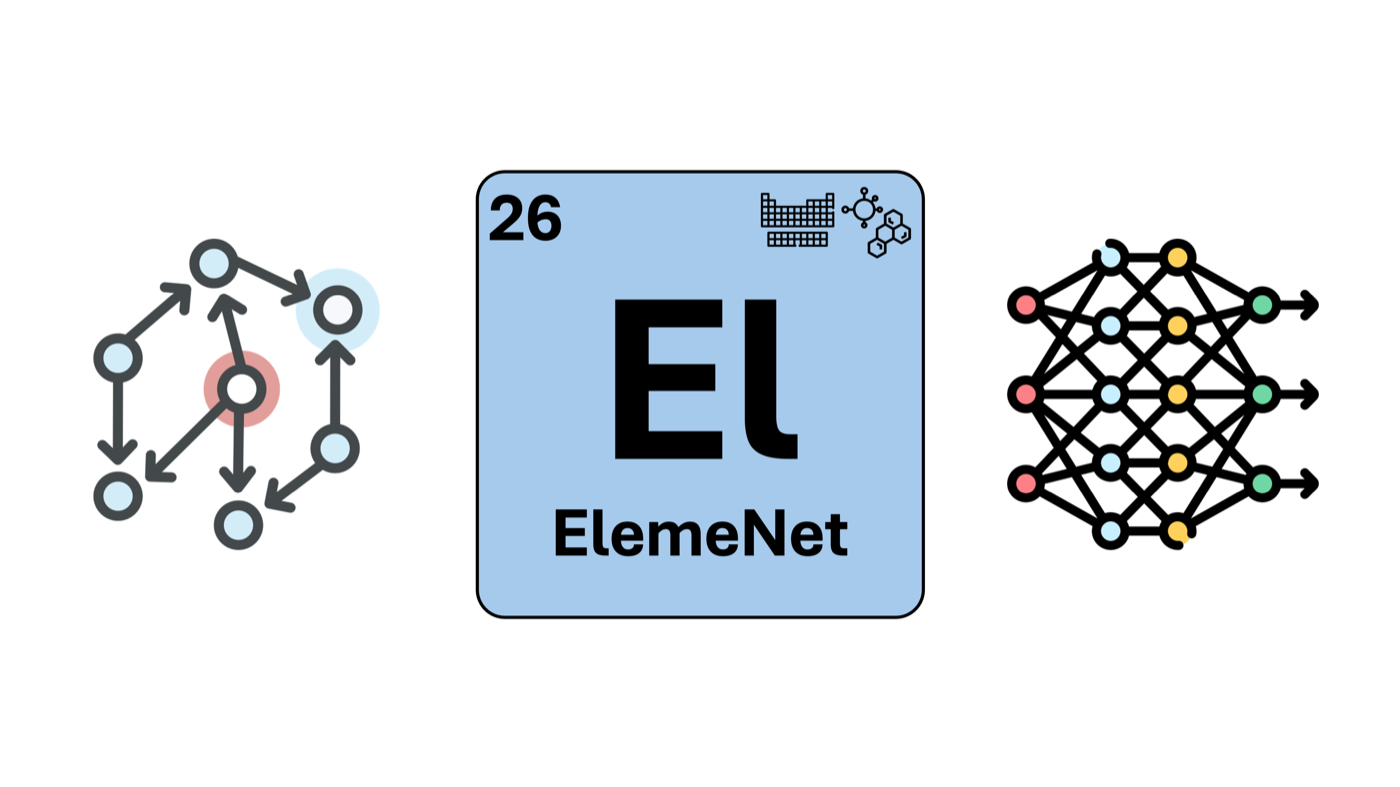
Advances in deep learning architectures and representations have enabled ML-driven chemical property prediction, but state-of-the-art (SOTA) models have remained largely confined to independent codebases and lack support for diverse chemical species. This work introduces ElemeNet, a unified, general-purpose software package for molecular machine learning. The ElemeNet software package enables the training of advanced ML models for diverse properties and datasets with an enlarged range of elemental compositions. We define molecular representations compatible with elements 1-100, supporting diverse organometallic and biological systems in addition to organic chemistry already well-served by the Chemprop ML toolkit. As well as more common atom-, bond-, and molecule-level predictions, we introduce moiety predictions. We also natively define optional conditioning on charge and spin states. Advanced E(3)-equivariant and transformer architectures are supported, as well as classical 2D models, with all classes including built-in uncertainty quantification through deterministic and statistical measures. We benchmark our protocols for ML model training against representative datasets from organic, inorganic, coordination, and biological chemistry, achieving competitive and SOTA performance relative to literature baselines and favorable scaling to millions of molecules. The entire workflow is exposed through a concise command-line interface, lowering the barrier to entry for non-expert users. We anticipate ElemeNet will empower non-computational researchers to leverage modern deep learning methods across the chemical and physical sciences.
@article{toney2026elemenet, title = {ElemeNet: Multiscale Molecular Machine Learning with Uncertainty Quantification Across the Periodic Table}, author = {Toney, Jacob W. and Darouich, Samir and Wang, Yiran and Garrison, Aaron G. and Kästner, Johannes and Kulik, Heather J.}, journal = {arXiv}, year = {2026}, publisher = {arXiv}, doi = {10.48550/arXiv.2606.30961}, url = {https://doi.org/10.48550/arXiv.2606.30961}, } - molSimplify 2.0: Improved Structure Generation for Automating Discovery in Inorganic Molecular and Reticular ChemistryGianmarco G. Terrones, Roland G. St. Michel, Jacob W. Toney, Akash K. Ball, Yiran Wang, Aaron G. Garrison, Aditya Nandy, Ralf Meyer, Freya Edholm, Changhwan Oh, Sebastian G. Pujet, Daniel B. K. Chu, Davut Muhammetgulyyev, and Heather J. KulikJournal of Chemical Information and Modeling, 2026
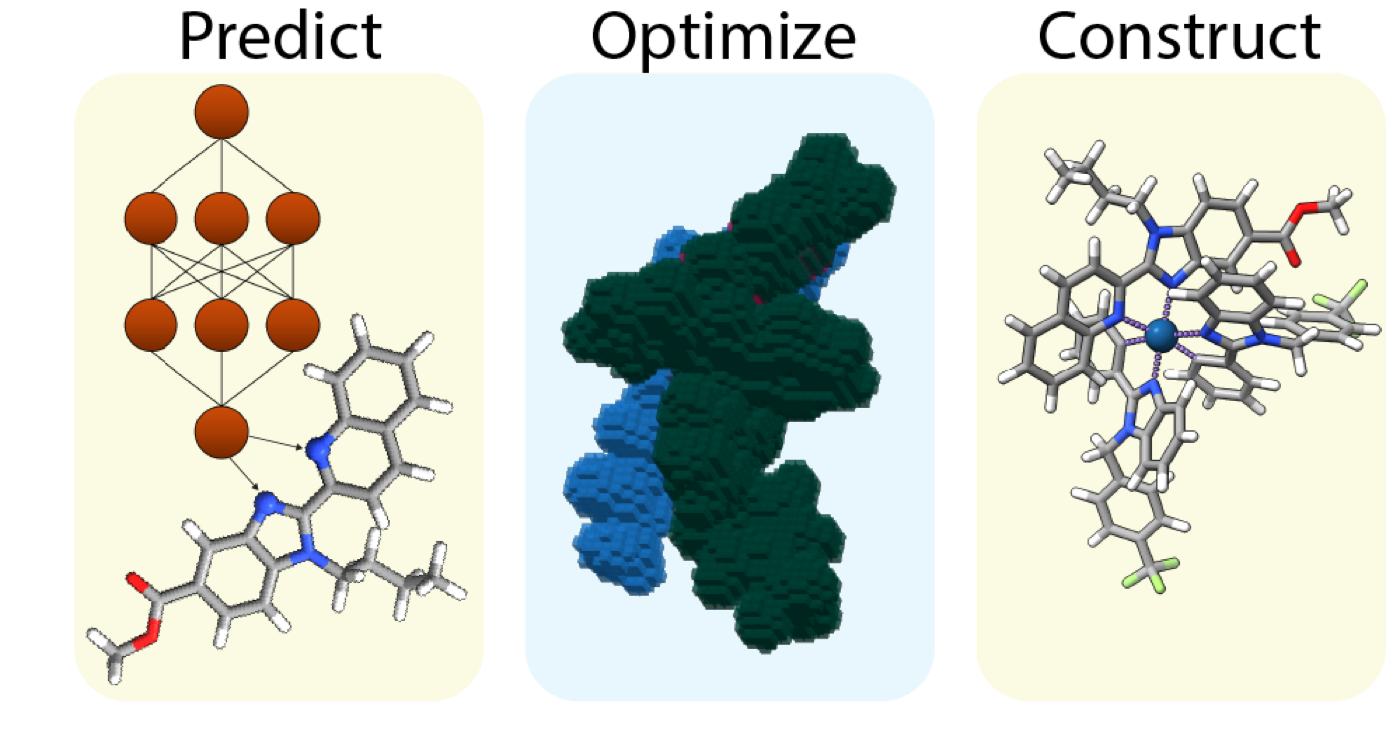
We provide an overview of core molSimplify code functionality and recent updates that enhance its capabilities for automated molecular and materials modeling. We describe the mol3D and atom3D classes, which store atomic and bonding information for a wide range of functions, including reading, modifying, and characterizing molecular geometries from common file formats. Enhancements to decoration and substructure addition functions enable the systematic derivatization of template molecules. We introduce a new mol2D class that enables graph-based uniqueness checks and substructure identification. Most importantly, we introduce improvements to transition metal complex (TMC) generation that eliminate steric clashes and enable structure building with ligands of higher denticity. Integration with machine learning models that predict coordinating atom identities enables truly high-throughput, de novo TMC generation. We describe applications of molSimplify outside of isolated TMCs, including extensions to periodic systems (e.g., metal–organic frameworks) and to metalloenzymes through the protein3D class. We demonstrate our improved combined structure prediction and generation workflow by generating structures of a database of experimentally characterized Ir complexes from only the SMILES strings of their respective ligands. We envision that recent enhancements will make the code easily extendable to other periodic materials, such as covalent organic frameworks and zeolites, or to multimetallic TMCs.
@article{terrones2026jcim,
  title = {molSimplify 2.0: Improved Structure Generation for Automating Discovery in Inorganic Molecular and Reticular Chemistry},
  author = {Terrones, Gianmarco G. and St. Michel, Roland G. and Toney, Jacob W. and Ball, Akash K. and Wang, Yiran and Garrison, Aaron G. and Nandy, Aditya and Meyer, Ralf and Edholm, Freya and Oh, Changhwan and Pujet, Sebastian G. and Chu, Daniel B. K. and Muhammetgulyyev, Davut and Kulik, Heather J.},
  journal = {Journal of Chemical Information and Modeling},
  year = {2026},
  publisher = {American Chemical Society},
  doi = {10.1021/acs.jcim.5c02733},
  url = {https://doi.org/10.1021/acs.jcim.5c02733},
}
2025
- Identifying Dynamic Metal–Ligand Coordination Modes with Ensemble LearningJacob W. Toney, Roland G. St. Michel, Aaron G. Garrison, Ilia Kevlishvili, and Heather J. KulikJournal of the American Chemical Society, 2025
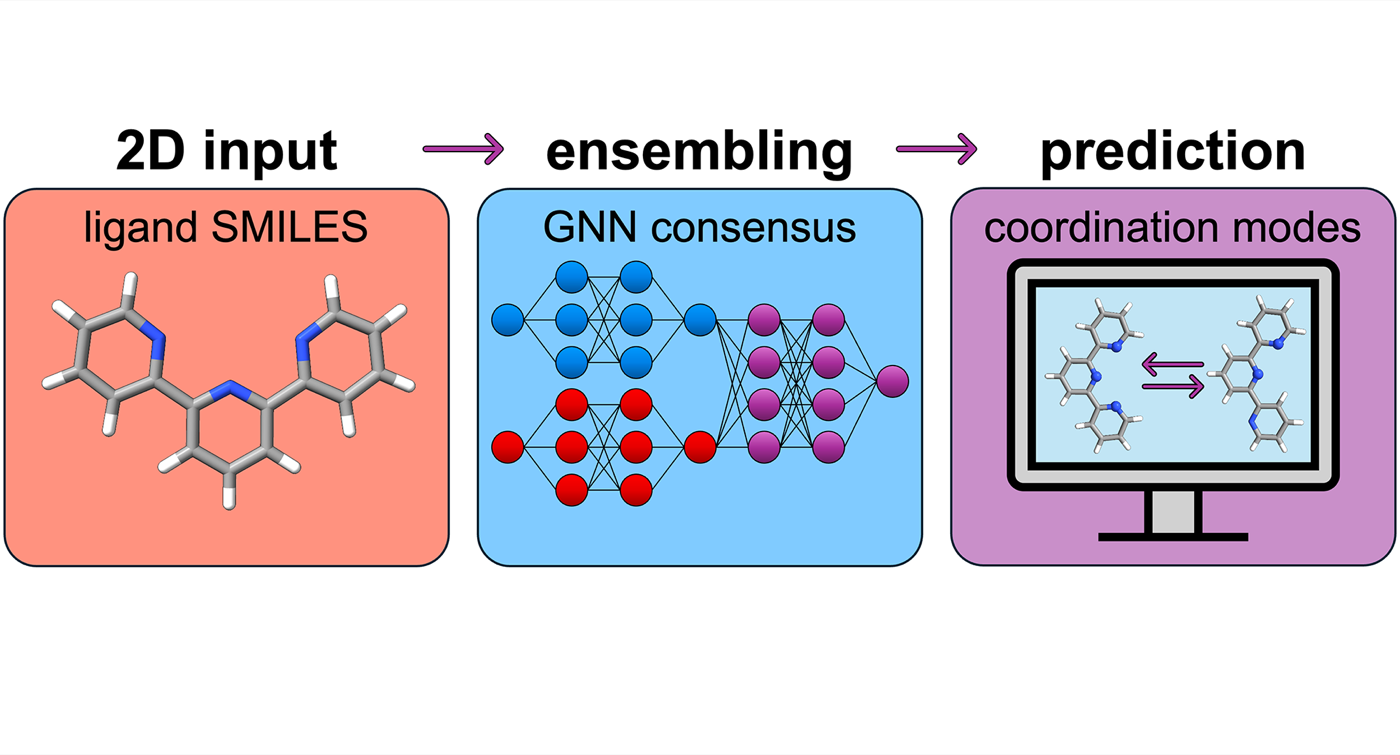
Knowledge of how a ligand coordinates a metal is essential for mechanistic and data-driven studies of transition metal complexes (TMCs), but most analyses assume a single binding interaction for a given metal–ligand pair. In catalysis, many ligands engage in dynamic, hemilabile coordination modes, challenging this assumption. In this work, we curate data sets of hemilabile and nonhemilabile ligands from experimentally characterized structures in the Cambridge Structural Database, analyze trends in observed coordination modes, and introduce four exhaustive and mutually exclusive types of hemilability. Using these labeled data sets, we train graph neural networks to carry out classification of hemilabile ligands with high accuracy, precision, and recall and develop an ensemble algorithm that predicts primary and alternative chemically plausible coordination modes from SMILES strings in an end-to-end fashion. We demonstrate the utility of our algorithm by generating novel TMCs in predicted coordination modes and calculating the corresponding energy difference due to changes in coordination (i.e., ΔEc) with density functional theory. Comparing our novel TMCs in multiple poses against an energetic criterion from experimentally observed TMCs confirms the plausibility of our alternative poses. We anticipate that our open-source workflows will accelerate organometallic discovery in experimental and virtual screening campaigns by proposing realistic metal–ligand coordination.
@article{toney2025jacs, title = {Identifying Dynamic Metal–Ligand Coordination Modes with Ensemble Learning}, author = {Toney, Jacob W. and St. Michel, Roland G. and Garrison, Aaron G. and Kevlishvili, Ilia and Kulik, Heather J.}, journal = {Journal of the American Chemical Society}, volume = {147}, issue = {52}, pages = {48218--48234}, year = {2025}, publisher = {American Chemical Society}, doi = {10.1021/jacs.5c17169}, url = {https://doi.org/10.1021/jacs.5c17169}, } - Graph neural networks for predicting metal–ligand coordination of transition metal complexesJacob W. Toney, Roland G. St. Michel, Aaron G. Garrison, Ilia Kevlishvili, and Heather J. KulikProceedings of the National Academy of Sciences, 2025
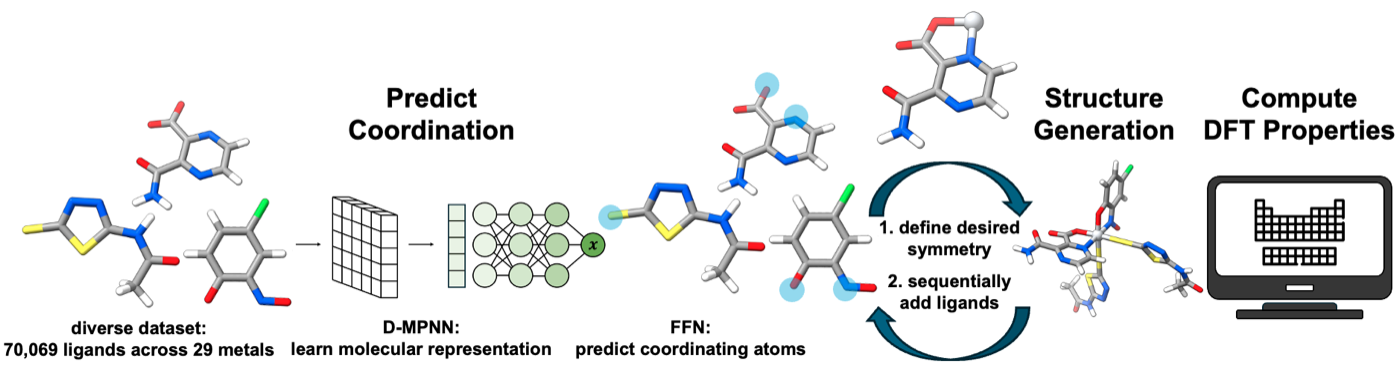
High-throughput virtual screening campaigns are invaluable for surveying the combinatorial space of possible transition metal complexes (TMCs), but they rely on accurate metal–ligand connectivity for meaningful results. Here, we curate a dataset of 70,069 unique ligands of known coordination from experimental structures of TMCs deposited in the Cambridge Structural Database. Using this dataset, we train separate graph neural network models to predict the total number and individual identities of ligand coordinating atoms with high accuracy and precision. Interpreting each model in terms of the learned molecular representations uncovers trends aligned with our understanding of coordination chemistry as well as chemical insights. Next, we integrate the trained models with the high-throughput screening software molSimplify and illustrate their utility by generating 1,175 TMCs and validating their geometries with density functional theory calculations. We anticipate these models will accelerate computational screening of TMCs with de novo combinations of metals and ligands in physically realistic coordination.
@article{toney2025pnas, title = {Graph neural networks for predicting metal–ligand coordination of transition metal complexes}, author = {Toney, Jacob W. and St. Michel, Roland G. and Garrison, Aaron G. and Kevlishvili, Ilia and Kulik, Heather J.}, journal = {Proceedings of the National Academy of Sciences}, volume = {122}, issue = {41}, pages = {e2415658122}, year = {2025}, publisher = {National Academy of Sciences}, doi = {10.1073/pnas.2415658122}, url = {https://doi.org/10.1073/pnas.2415658122}, } - Exploring beyond experiment: generating high-quality datasets of transition metal complexes with quantum chemistry and machine learningJacob W. Toney, Aaron G. Garrison, Weiliang Luo, Roland G. St. Michel, Sukrit Mukhopadhyay, and Heather J. KulikCurrent Opinion in Chemical Engineering, 2025
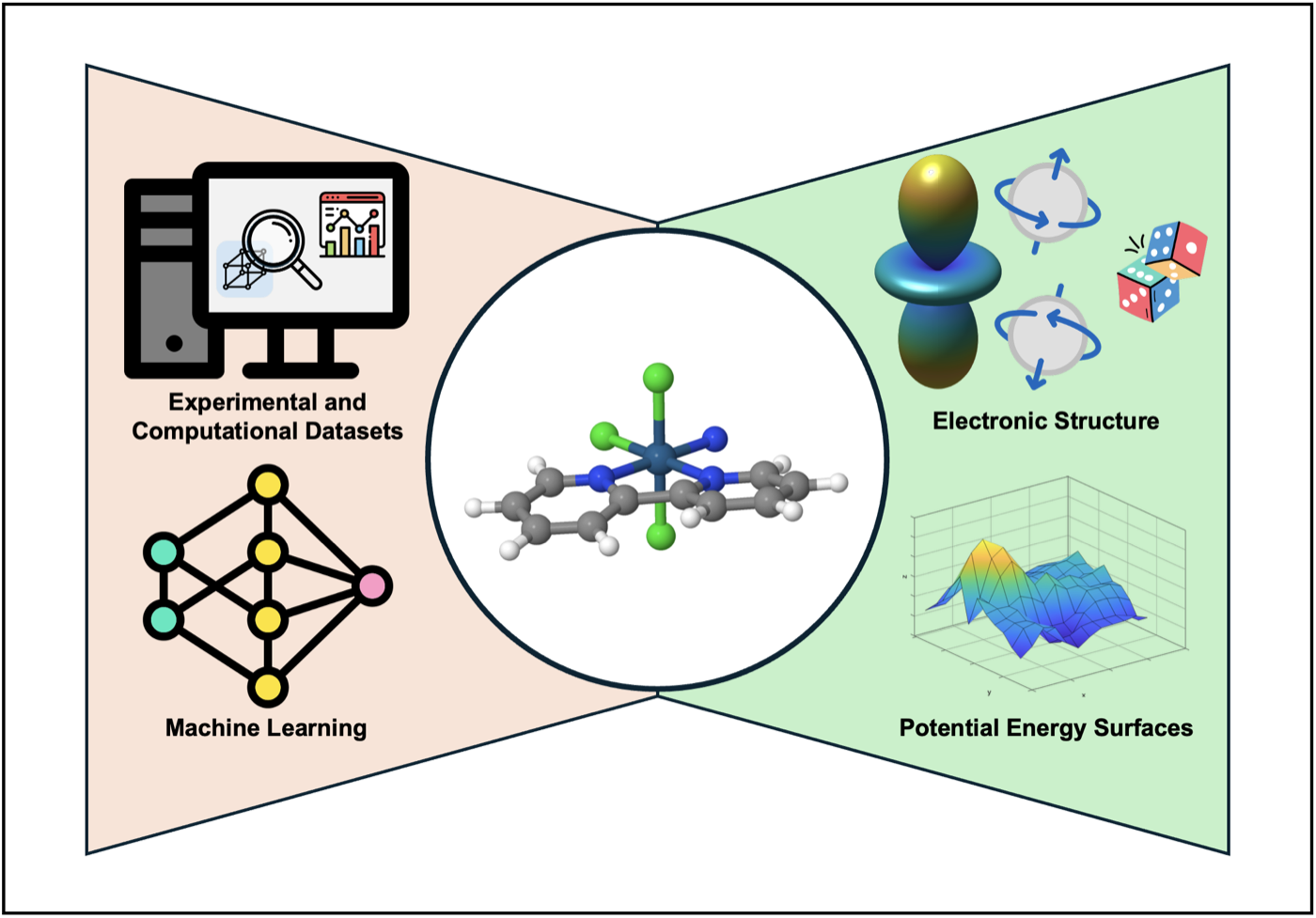
Machine learning (ML) approaches enable screening of the vast chemical space of transition metal complexes (TMCs) at faster speeds than either experimental approaches or ab initio calculations, but their quality is highly dependent on the reference data used. Existing TMC datasets often leverage experimental structures, which biases methods trained on this data away from reactive configurations. Calculating properties of these TMCs also introduces challenges of spin and oxidation state assignment. Recent work on generating hypothetical TMCs with realistic connectivity and geometry has demonstrated promise to extend datasets beyond experimental structures, especially when combined with ML approaches to identify complexes with desirable properties. Experimental measurements would be ideal to train and/or test these models but are often scarce for TMCs, especially for those that are catalytically active. Thus, properties calculated with electronic structure theory are a popular alternative choice for training ML models. However, TMCs are challenging for many conventional electronic structure methods, and few benchmark datasets exist to assess which methods are most reliable and cost-effective. Many of the recommended methods are computationally demanding, leading to the use of neural network potentials as surrogate models for large-scale screening. By utilizing emerging tools for TMC structure generation and suitable electronic structure methods, increasingly high-quality datasets will be curated to enhance the predictive power of ML approaches to discover novel TMCs, including in the development of neural network potentials. By more accurately predicting TMC properties, promising and practical candidates for catalysis, photosensitizers, molecular devices, and medicine will be identified.
@article{toney2025curropin, title = {Exploring beyond experiment: generating high-quality datasets of transition metal complexes with quantum chemistry and machine learning}, author = {Toney, Jacob W. and Garrison, Aaron G. and Luo, Weiliang and St. Michel, Roland G. and Mukhopadhyay, Sukrit and Kulik, Heather J.}, journal = {Current Opinion in Chemical Engineering}, volume = {50}, pages = {101189}, year = {2025}, publisher = {Elsevier}, doi = {10.1016/j.coche.2025.101189}, url = {https://doi.org/10.1016/j.coche.2025.101189} } - Exploring Transition Metal Complexes with Large Language ModelsYunsheng Liu, Jacob W. Toney, Joseph M. Cavanagh, Kunyang Sun, Andrew L. Smith, Chung-Yueh Yuan, Roland G. St. Michel, Paul A. Graggs, F. Dean Toste, Heather J. Kulik, and Teresa Head-GordonChemRxiv, 2025
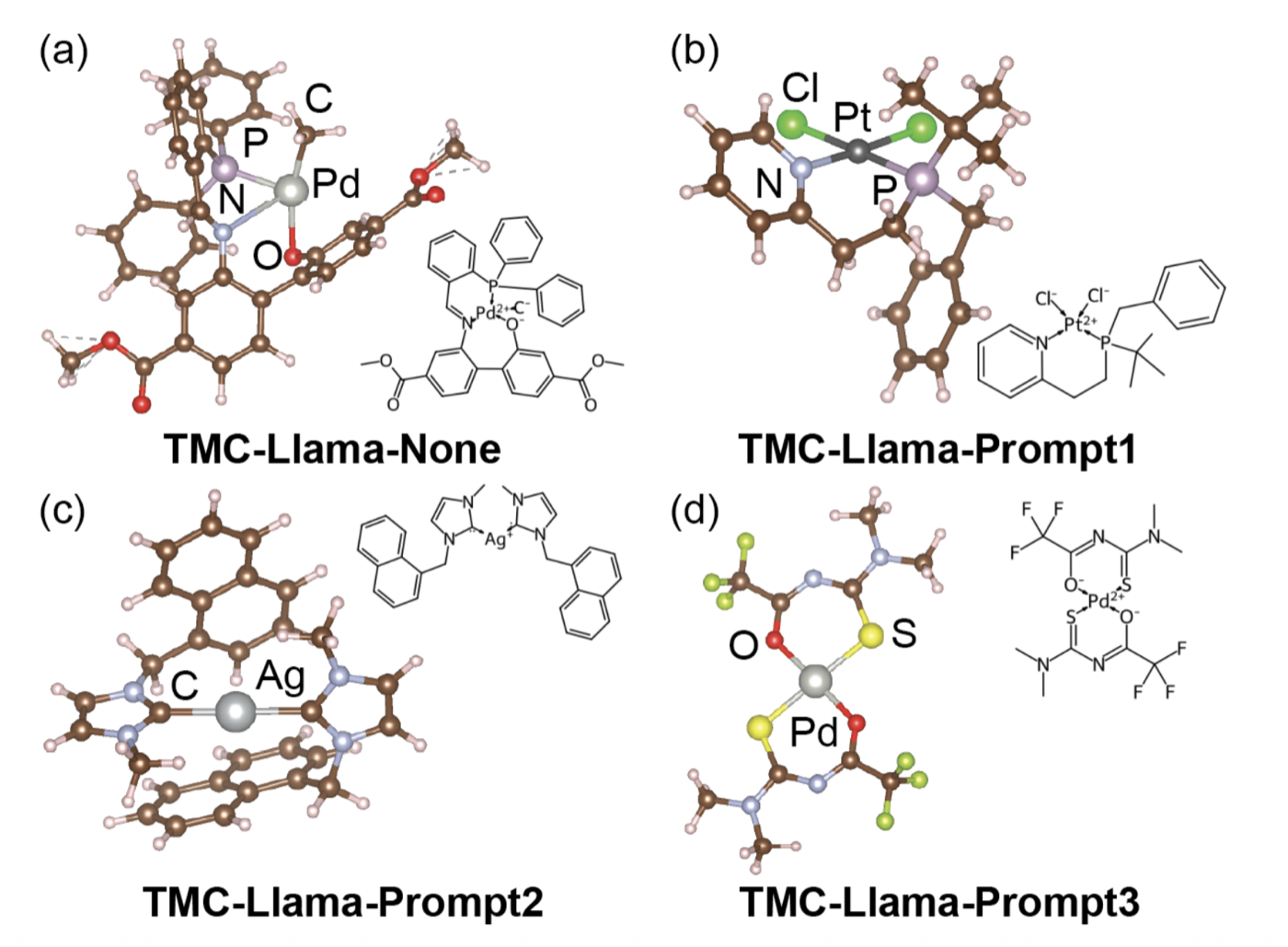
Here we use a large language model for the exploration of chemical space of transition metal complexes (TMCs), fine-tuning the open-source Llama-3.2-1B model with a variation of the SMILES string representation tailored for coordination chemistry. We identify several key molecular properties that are critical to produce valid TMCs which we use for prompt engineering, creating TMC-Llama models that generate unique, novel, and structurally validated TMCs at high success rates, and exceeding the performance of both standard benchmarks as well as state-of-the-art generative methods in the literature. We use the pydentate workflow to show that the TMC-Llama model generates new TMC chemistries that are physically realistic, synthetically plausible, and geometrically consistent with large datasets of known experimental TMCs. Our study lays the groundwork for future TMC-Llama generative model applications to discover new TMCs for functional materials for catalysis, photochemistry, medicine, and sustainability technologies.
@article{liu2025chemrxiv, title = {Exploring Transition Metal Complexes with Large Language Models}, author = {Liu, Yunsheng and Toney, Jacob W. and Cavanagh, Joseph M. and Sun, Kunyang and Smith, Andrew L. and Yuan, Chung-Yueh and St. Michel, Roland G. and Graggs, Paul A. and Toste, F. Dean and Kulik, Heather J. and Head-Gordon, Teresa}, journal = {ChemRxiv}, year = {2025}, publisher = {ChemRxiv}, doi = {10.26434/chemrxiv-2025-hm3zb}, url = {https://doi.org/10.26434/chemrxiv-2025-hm3zb} } - Leveraging natural language processing to curate the tmCAT, tmPHOTO, tmBIO, and tmSCO datasets of functional transition metal complexesIlia Kevlishvili, Roland G. St. Michel, Aaron G. Garrison, Jacob W. Toney, Husain Adamji, Haojun Jia, Yuriy Román-Leshkov, and Heather J. KulikFaraday Discussions, 2025
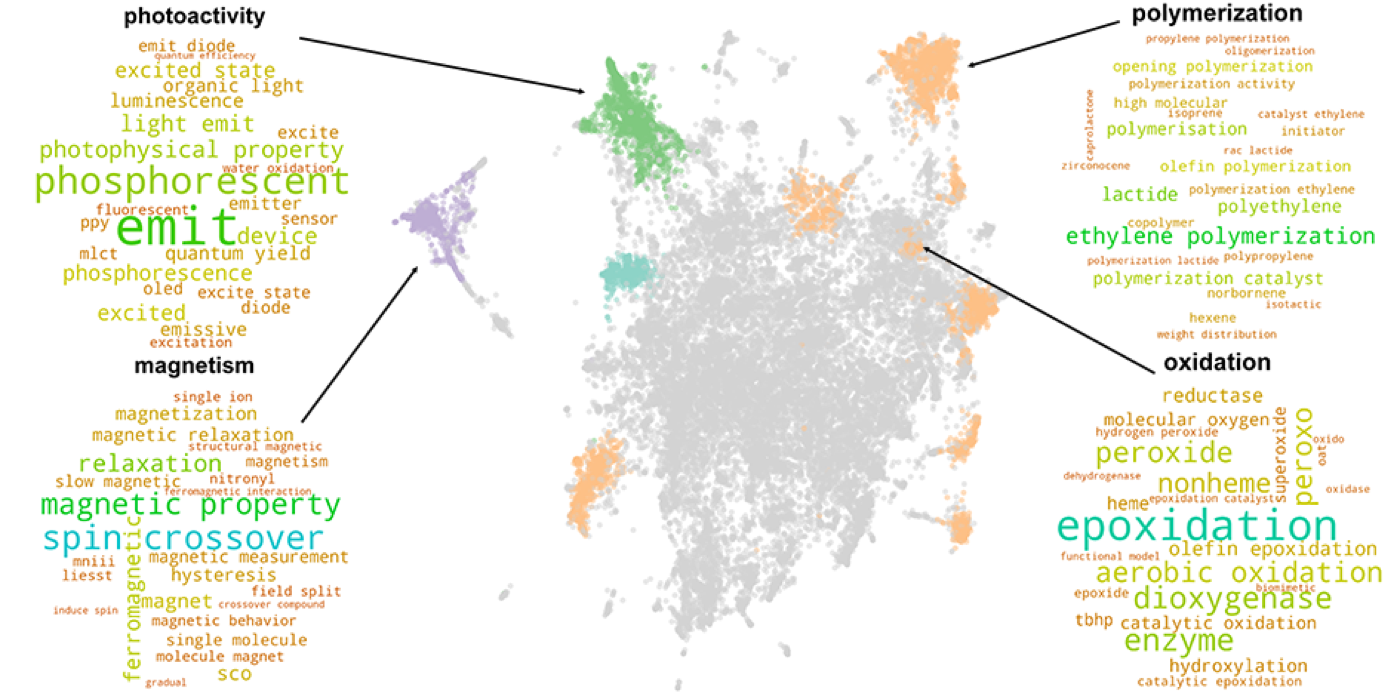
The breadth of transition metal chemical space covered by databases such as the Cambridge Structural Database and the derived computational database tmQM is not conducive to application-specific modeling and the development of structure–property relationships. Here, we employ both supervised and unsupervised natural language processing (NLP) techniques to link experimentally synthesized compounds in the tmQM database to their respective applications. Leveraging NLP models, we curate four distinct datasets: tmCAT for catalysis, tmPHOTO for photophysical activity, tmBIO for biological relevance, and tmSCO for magnetism. Analyzing the chemical substructures within each dataset reveals common chemical motifs in each of the designated applications. We then use these common chemical structures to augment our initial datasets for each application, yielding a total of 21,631 compounds in tmCAT, 4599 in tmPHOTO, 2782 in tmBIO, and 983 in tmSCO. These datasets are expected to accelerate the more targeted computational screening and development of refined structure–property relationships with machine learning.
@article{kevlishvili2025faraday,
  title = {Leveraging natural language processing to curate the tmCAT, tmPHOTO, tmBIO, and tmSCO datasets of functional transition metal complexes},
  author = {Kevlishvili, Ilia and St. Michel, Roland G. and Garrison, Aaron G. and Toney, Jacob W. and Adamji, Husain and Jia, Haojun and Román-Leshkov, Yuriy and Kulik, Heather J.},
  journal = {Faraday Discussions},
  volume = {256},
  pages = {275--303},
  year = {2025},
  publisher = {Royal Society of Chemistry},
  doi = {10.1039/D4FD00087K},
  url = {https://doi.org/10.1039/D4FD00087K}
}
2023
- A computational mechanistic study of C–H hydroxylation with mononuclear copper–oxygen complexesZhenzhuo Lan*, Jacob W. Toney*, and Shaama Mallikarjun SharadaCatalysis Science & Technology, 2023
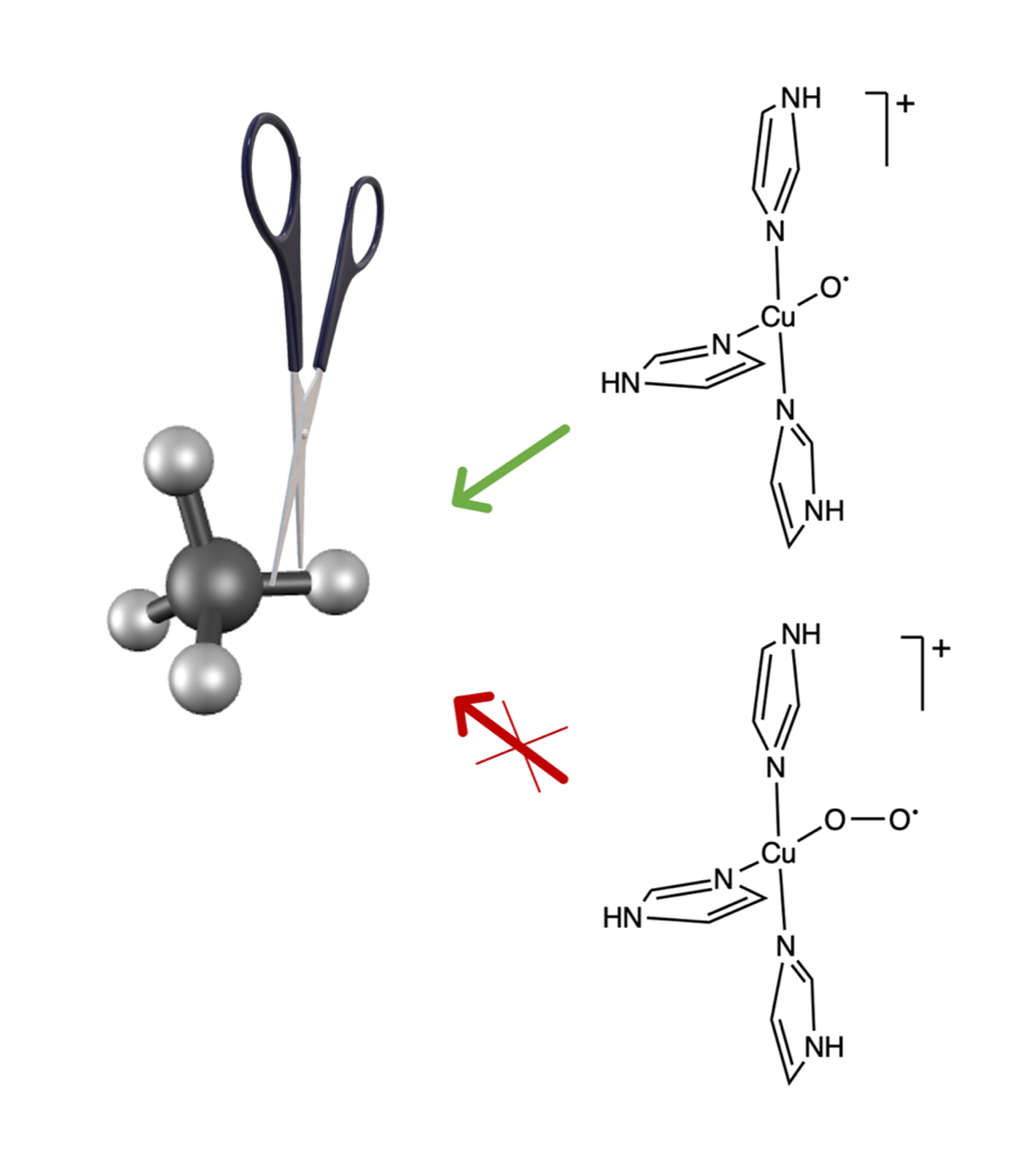
We present a computational study of methane hydroxylation by oxygen-bound monocopper complexes with the twin goals of resolving the active site identity and preferred mechanism of CH activation. Oxyl ([Cu(II)O(Im)3]+) and superoxo ([Cu(II)OO(Im)3]+) monocopper centers coordinated to three imidazole N-donors are investigated. Constrained density functional theory (CDFT) is necessary to overcome delocalization errors inherent to DFT and generate catalyst geometries with physically meaningful charge and spin at the active site. A comparison of ground-state triplet and excited-state singlet potential energy profiles for CH hydroxylation shows that oxyl is the more likely active site. For oxyl, spin crossing from the triplet to singlet potential energy surface may yield a lower energy hydroxylation pathway when compared to the pure triplet surface. The calculation of minimum energy crossing points is an essential next step towards determining whether CH hydroxylation proceeds via a two-step radical or single-step oxo-insertion mechanism.
@article{lan2023catalysis,
  title = {A computational mechanistic study of C–H hydroxylation with mononuclear copper–oxygen complexes},
  author = {Lan, Zhenzhuo and Toney, Jacob W. and Sharada, Shaama Mallikarjun},
  journal = {Catalysis Science & Technology},
  volume = {13},
  number = {2},
  pages = {342--351},
  year = {2023},
  publisher = {Royal Society of Chemistry},
  doi = {10.1039/D2CY01128J},
  url = {https://doi.org/10.1039/D2CY01128J},
}