the largest, most diverse dataset of quantum chemical properties on experimentally-synthesized transition metal complexes
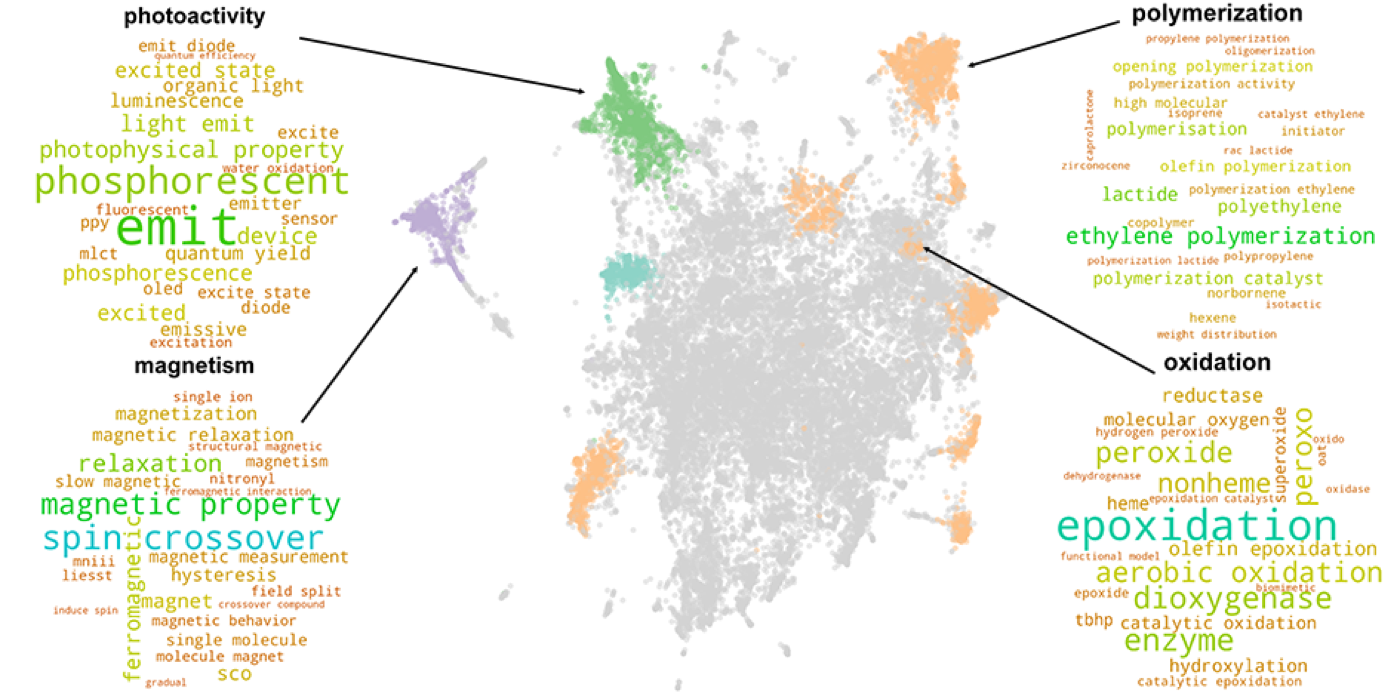
Machine learning for chemistry has primarily relied on large datasets of closed-shell, neutral, organic molecules. Despite their numerous applications, transition metal complexes (TMCs) have received a fraction of the coverage of organics, in part due to their complex electronic structure and limited experimental data (Curr Opin Chem Eng 2025). Early work applied natural language processing on existing TMC datasets to curate subsets of chemical space labeled with their applications in catalysis, photochemistry, medicine, and magnetism (Faraday Discuss 2025).
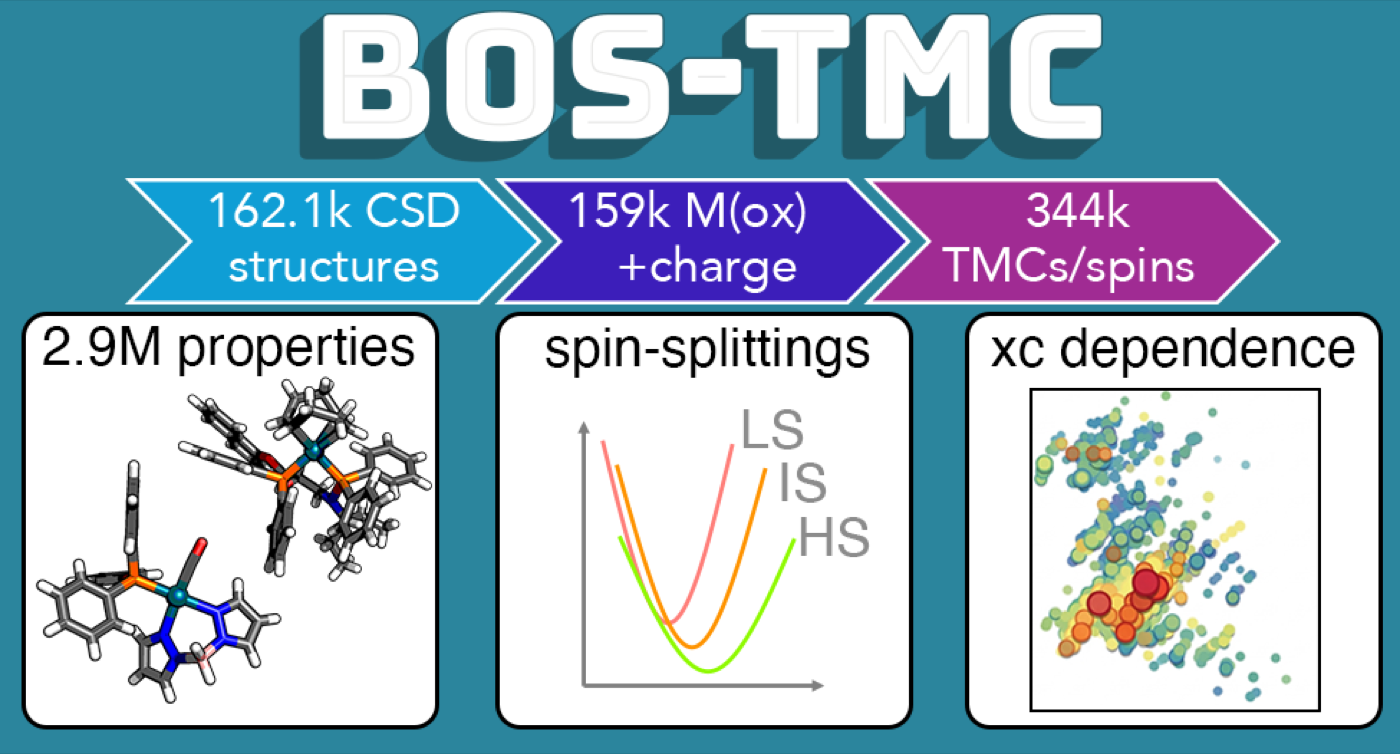
Chemical relevance is valuable, but our early work utilized noisy datasets of closed-shell chemistry. We recently introduced the BOS-TMC dataset of DFT properties for 159k experimentally characterized TMCs, computed in up to three spin states (JCIM 2026). With nearly 344k TMC/spin combinations and over 2.9M properties in total, BOS-TMC is the largest and most diverse dataset of quantum chemical properties calculated on experimental TMCs.
For a subset of over 10k structures, we calculate properties with twelve exchange-correlation functionals spanning Jacob’s ladder, mapping functional sensitivity across properties and chemical motifs. I look forward to seeing the community leverage BOS-TMC for advances in density functional development, machine learning, and the guided exploration of chemical space. Most importantly, the work is open-access and the dataset freely accessible on Zenodo.
We present the Boston Open-Shell Transition Metal Complex (BOS-TMC) dataset, a set of density functional theory (DFT) properties for 159k experimentally characterized mononuclear transition metal complexes (TMCs) in multiple spin states with a range of formal charges derived from the Cambridge Structural Database (CSD). To curate this set, we carried out an iterative procedure to confidently assign overall TMC charge. From this information, we then obtained properties in up to three spin states, i.e., low-, intermediate-, and high-spin for 3d metals and low- and intermediate-spin for 4d and 5d metals, depending on compatibility with the metal electron configuration, for a total of 343.8k TMC/spin combinations. At odds with prior sets, we preserved experimental heavy-atom coordinates in these structures during optimization. We report all properties using PBE0/def2-TZVP single-point energies on these structures. We introduce a scheme for computing metal-spin-dependent atomization energies, which we report for each TMC. Alongside electronic energies, we report up to seven additional properties including: HOMO, LUMO, HOMO-LUMO gap, atomic partial charges, dipole moments, atomization energies, and spin-splitting energies for a total of over 2.9M TMC-associated properties. For a representative subset of over 10k complexes chosen based on size, we evaluate the sensitivity of computed properties to exchange-correlation (xc) functional choice from a set of twelve xcs spanning rungs of "Jacob’s ladder", highlighting hotspots of TMC space that have the greatest uncertainty. In comparison to prior transition-metal datasets, BOS-TMC is both larger and more diverse in terms of charge and spin configurations and, as a result, more diverse in its range of properties. This dataset is expected to provide a high-fidelity foundation for machine-learning model development, DFT benchmarking, and exploration.
@article{garrison2026bostmc,title={The BOS-TMC Dataset: DFT Properties of 159k Experimentally Characterized Transition Metal Complexes Spanning Multiple Charge and Spin States},author={Garrison, Aaron G. and Toney, Jacob W. and Nikolaeva, Tatiana and St. Michel, Roland G. and Stein, Christopher J. and Kulik, Heather J.},journal={Journal of Chemical Information and Modeling},year={2026},publisher={American Chemical Society},doi={10.1021/acs.jcim.6c01792},url={https://doi.org/10.1021/acs.jcim.6c01792},}
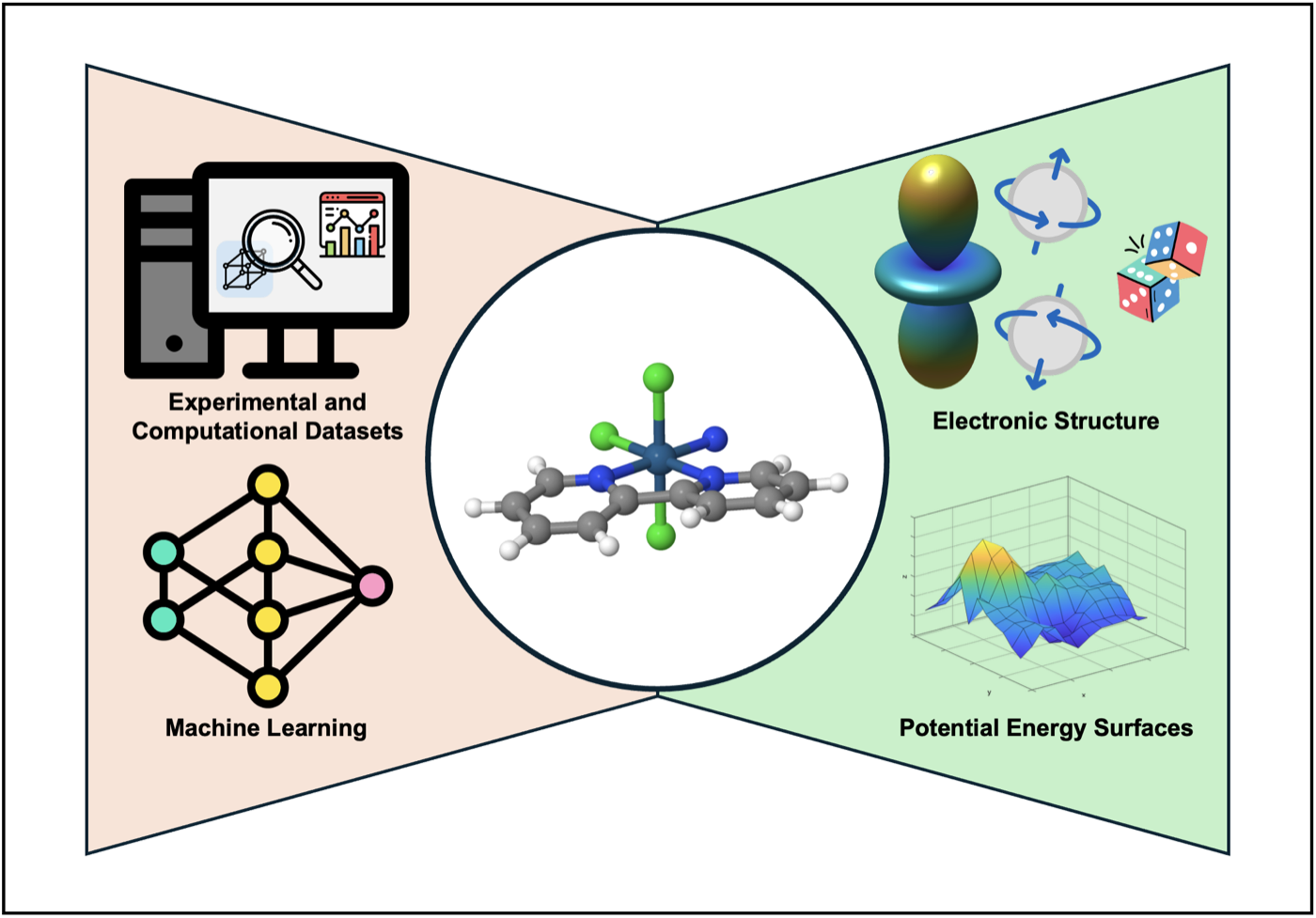
Machine learning (ML) approaches enable screening of the vast chemical space of transition metal complexes (TMCs) at faster speeds than either experimental approaches or ab initio calculations, but their quality is highly dependent on the reference data used. Existing TMC datasets often leverage experimental structures, which biases methods trained on this data away from reactive configurations. Calculating properties of these TMCs also introduces challenges of spin and oxidation state assignment. Recent work on generating hypothetical TMCs with realistic connectivity and geometry has demonstrated promise to extend datasets beyond experimental structures, especially when combined with ML approaches to identify complexes with desirable properties. Experimental measurements would be ideal to train and/or test these models but are often scarce for TMCs, especially for those that are catalytically active. Thus, properties calculated with electronic structure theory are a popular alternative choice for training ML models. However, TMCs are challenging for many conventional electronic structure methods, and few benchmark datasets exist to assess which methods are most reliable and cost-effective. Many of the recommended methods are computationally demanding, leading to the use of neural network potentials as surrogate models for large-scale screening. By utilizing emerging tools for TMC structure generation and suitable electronic structure methods, increasingly high-quality datasets will be curated to enhance the predictive power of ML approaches to discover novel TMCs, including in the development of neural network potentials. By more accurately predicting TMC properties, promising and practical candidates for catalysis, photosensitizers, molecular devices, and medicine will be identified.
@article{toney2025curropin,title={Exploring beyond experiment: generating high-quality datasets of transition metal complexes with quantum chemistry and machine learning},author={Toney, Jacob W. and Garrison, Aaron G. and Luo, Weiliang and St. Michel, Roland G. and Mukhopadhyay, Sukrit and Kulik, Heather J.},journal={Current Opinion in Chemical Engineering},volume={50},pages={101189},year={2025},publisher={Elsevier},doi={10.1016/j.coche.2025.101189},url={https://doi.org/10.1016/j.coche.2025.101189}}
The breadth of transition metal chemical space covered by databases such as the Cambridge Structural Database and the derived computational database tmQM is not conducive to application-specific modeling and the development of structure–property relationships. Here, we employ both supervised and unsupervised natural language processing (NLP) techniques to link experimentally synthesized compounds in the tmQM database to their respective applications. Leveraging NLP models, we curate four distinct datasets: tmCAT for catalysis, tmPHOTO for photophysical activity, tmBIO for biological relevance, and tmSCO for magnetism. Analyzing the chemical substructures within each dataset reveals common chemical motifs in each of the designated applications. We then use these common chemical structures to augment our initial datasets for each application, yielding a total of 21,631 compounds in tmCAT, 4599 in tmPHOTO, 2782 in tmBIO, and 983 in tmSCO. These datasets are expected to accelerate the more targeted computational screening and development of refined structure–property relationships with machine learning.
@article{kevlishvili2025faraday,title={Leveraging natural language processing to curate the tmCAT, tmPHOTO, tmBIO, and tmSCO datasets of functional transition metal complexes},author={Kevlishvili, Ilia and St. Michel, Roland G. and Garrison, Aaron G. and Toney, Jacob W. and Adamji, Husain and Jia, Haojun and Román-Leshkov, Yuriy and Kulik, Heather J.},journal={Faraday Discussions},volume={256},pages={275--303},year={2025},publisher={Royal Society of Chemistry},doi={10.1039/D4FD00087K},url={https://doi.org/10.1039/D4FD00087K}}